Privacy-first eSigning
 Seamless Identity Check
 Digital Twin
 Lifecycle Updates
 Simple API Integration
 Real estate
 Financial Services
 Healthcare
 Education
 All industries
 Sales
Sales HR
HR Procurement
 Legal
Legal Legal Validity
 Blog
Blog News
News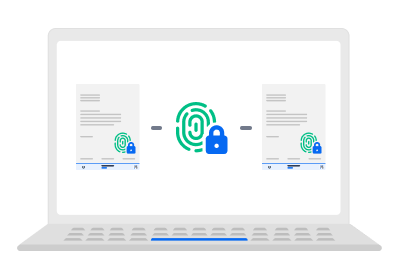


Oh – so your documents are “encrypted”, your eSignature provider says? That’s great – but what does it really mean? What kind of encryption is being used, who holds the key, what loopholes are there, and – most importantly – does that encryption really keep your documents private across the entire eSignature journey?
Spoiler alert: Unless the encryption is End-to-end, you’re likely still facing a significant security risk.
Without end-to-end encryption, you’re potentially exposing your sensitive documents to any number of prying eyes. From greedy hackers to data-hungry governments and even your very own eSignature provider: The only way to keep your documents truly private is with end-to-end encryption.
You may never have heard of end-to-end encryption: It’s considered the gold-standard of encryption due to the fact that only the sender and recipient are able to decrypt the content, but none of the many other parties your documents may be exposed to on their digital journey.
Here’s the Role End-to-End Encryption Plays for eSignatures
Once you start scratching the surface, you quickly realize that there are a slew of security risks involved in any transfer on the internet. Since your signature documents can potentially hold some of your most sensitive information, it’s worth making sure you don’t fall into any of the digital traps that spring up when signing documents online.
| Without end-to-end encryption… | With end-to-end encryption… |
| …you’re exposing your content to your eSignature provider. | …you don’t have to worry about the fine print stating your privacy rights. |
| …you rely on your eSignature provider encrypting their cloud content. | …a lack of encryption on the cloud-side does not affect you (and your privacy) at all. |
| …your documents are at risk as soon as they touch your internet connection. | …any attack on your internet connection will simply show illegible, encrypted documents. |
| …you may not be able to do business with companies trading in high-risk information. | …you can securely do business with any company out there – no exceptions. |
| …you are exposing your content to the US government when working with US-based eSignature providers. | …the content of your documents stays private and confidential, even in the US. |
| …you have to make sure your documents are only ever stored in locations you’d trust the government to respect your privacy. | …you don’t have to worry about any foreign agency going through your private data. |
| …your sensitive documents could fall victim to one of many international agreements to freely exchange data. | …the ever-changing landscape of cooperation between governments does not affect your privacy at all. |
| …you’re left guessing what “encryption” your eSignature provider really means, and how safe it is. | …there is no confusion: Documents are encrypted from the very first to the very last step of the journey. |
Now, you might think it’s a direct route from where you sign to the recipient of your document. But in reality, it’s anything but direct with most eSignature providers. Let’s take a closer look at all the stops along the way, and how each one presents a potential security risk without End-to-end encryption.
Anything other than end-to-end encryption carries risk
There are eSigning solutions designed to supposedly increase the security behind digital signatures. However, server-side encryption only kicks in once the document is submitted to the encryption process and stops as soon as the document leaves the server. And traditional user-based encryption is even worse and often sends the key to decrypt the document along with the document itself, essentially rendering the entire process useless.
Encryption sounds good – but it is not good enough. Simply because the word “encrypted” appears somewhere in a company’s marketing material does not mean it’s of any actual use when it comes to increasing the security of your data. Don’t rely on shiny buzzwords when it comes to the privacy of your most important documents.
Only end-to-end encryption offers complete privacy – including from the service provider itself. You create a document and encrypt it. The signatory party receives it, and decrypts it with their own key. There are no wishy-washy security measures you cannot trust or see in the middle, giving you the confidence you need for your sensitive data.
Virtually all eSignature providers are neither secure nor do they come with data privacy by default
When you have to upload your documents onto an eSignature platform, you transmit the content to their servers. This means that the actual document often stays on their server, waiting to be signed.
Working with unencrypted documents exposes their content to the eSignature platform. And while many platforms implement policies like the principle of least privilege, there is literally no way for you to know what they define as required access: You simply cannot be 100% certain that employees of your eSignature provider don’t read your documents.
End-to-end encryption makes endless fine print obsolete. By making sure your documents are end-to-end encrypted, you save hours trying to figure out who could gain access based on what clause in your provider’s fine print. This type of encryption is the only feasible way out of this dilemma – because there is no scenario where a service provider should have or need access to your data.
…and the same is true for their cloud storage
Your eSignature providers most likely store your documents in their cloud – no matter if you like it or not. But can you guarantee there is no unauthorized access to that data?
Too many eSignature providers don’t offer end-to-end encryption of your data when they store it in their cloud. That means that any document you store there, no matter how sensitive, is plainly visible to anyone with access. That includes employees of the business hosting your data (make sure you read the fine print…), but also the increasingly common security breach: Cloud storage providers are prime targets for hackers, who can gain access to huge amounts of valuable data with one single successful hack.
The only way to ensure complete confidentiality on clouds is with full end-to-end encryption. No matter how secure, a data breach can happen to the best of cloud storage providers. From the nosey system admin to the whizz kid who hacks their way in for kicks: With all of your signature documents encrypted, you won’t have to worry about anyone snooping around in your confidential data at all.
Your internet connection might not be as secure as you think
Let’s assume you’ve done all the right things: You are working in a secure environment and have chosen an eSignature provider that encrypts your documents on their servers. So far, so good. But what about any time your documents are in between these encrypted stations?
Whenever your documents travel through the internet, they can be intercepted. That can happen on a national scale or by any number of talented hacker groups out there just waiting for you to send that one unencrypted document they can hijack and modify. The classic scam is intercepting invoices and changing bank details for the remittance – and that’s just the tip of the iceberg.
Prevent hijacking with solid end-to-end encryption. Unless you’re the President of the United States, you’ll likely never work on a 100% secure internet connection. Don’t waste too much time worrying about hijacking – simply ensure that your documents are always end-to-end encrypted and know that any intercept will be utterly useless to the people conducting the hack.
Certain businesses could refuse to work with you digitally
Some industries rely more heavily on confidentiality than others. Anything from HR to certain legal documents and especially sensitive financial information – the results of losing this kind of data to an unknown entity could be devastating.
The lack of full document encryption prevents certain companies from going fully digital – or working with you if you’re fully paperless. Certain information is simply too sensitive to risk online, and in the absence of proper end-to-end eSignature encryption, some companies will insist on using old-school methods perceived as less prone to digital attacks.
Stand out with end-to-end document encryption, putting all privacy and security doubts to rest before they even arise. If you can provide full end-to-end encryption for your eSignatures, there is little reason to have any security concerns at all, given that this method is undoubtedly safer than traditional pen-and-paper signatures that need to be physically moved around. Further your own privacy and security reputation as well as your position in going paperless by offering a solid solution that will satisfy even the most skeptical and sensitive of businesses.
Big Brother is listening
Or Uncle Sam is, to be more precise. Not only do certain US government agencies have sheer unlimited processing power, but the CLOUD Act also clarifies their legal right to access customer data of US-based service providers. Care to count how many of the most common eSignature providers are US-based – or at least operate in the US (which also subjects them to the CLOUD Act)?
Without end-to-end encryption, even if a US-based eSignature platform offers complete privacy, they’re still obligated to open their books to the US government when they come knocking. With the ever-increasing complexity of global cloud systems, it’s getting harder and harder to pinpoint the location of your traffic and define where your data is stored. If your data touches any US-based infrastructure at any given point in time, it might quickly become a free-for-all for a plethora of agencies with 3-letter acronyms.
Full end-to-end encryption is the only way to prevent prying eyes from reading your documents. While it’s best to avoid US servers at all when it comes to privacy, making sure all of your data is fully end-to-end encrypted is an even better thing to do, especially given the US’s close collaboration with many other nations when it comes to privacy and security matters.
Not all governments respect privacy
Where is your data really hosted? Especially if you’re working with a budget eSigning provider – can you make sure the low price you’re paying to use their services (either for signing documents or simply storing your data) does not come at the cost of compromisable server locations?
Not all governments have clear rules and accountability when it comes to privacy. If you’re paying 1.99 per month for unlimited [insert service here], you might want to ask yourself if your data is the actual price you’re paying. And if you might be shocked by the CLOUD Act in the United States – have you asked yourself about the policies of the many governments that don’t have any publicly known rules at all?
Make sure your documents are fully end-to-end encrypted to avoid paying the ultimate price. You can only be sure nobody is selling your data behind your back if nobody without the proper key can access your documents at all.
Even trusted governments can freely exchange your data
The second part of the above-mentioned CLOUD Act is called “Executive Agreements.” In essence, it allows for close collaboration with the corresponding government agencies of partner countries to freely exchange data requested by either party, potentially circumventing the existing privacy laws of each country. So far, England is on board, and Australia is about to sign on as well.
Your unencrypted documents could soon be freely exchanged between governments. And while it’s fair to say that they would only go after data presumed to be illegal or crime-related, there is no way for you to know what that definition contains and how strictly the rules around it are being followed.
End-to-end encrypted documents preserve your privacy – no matter which governments decide to collaborate. The only way to stay ahead of the ever-changing legal environment and agreements between governments is to encrypt your data end-to-end, putting a full stop to any worries about preserving your privacy.
The Bottom Line
It often feels like the digital world surrounding us gets more complex by the minute. There are systems upon systems, layers upon layers, connections upon connections in anything we do online – and while the result is unprecedented flexibility and uncredible convenience, every single step in the process also comes with its own risks and challenges.
From your hard drive to your internet connection, then from your ISP to the recipient’s ISP across a data channel that may or may not be private, possibly stopping along the way and being stored on servers you’ll never know the location of… sending documents online is not as simple as getting some data from A to B in a straight line.
You’ll never be able to fully guarantee the trust in and security of all the stations involved in this process. It was not possible when the internet was first invented, and it’s becoming less and less likely with every step forward technology makes.
The only way to circumvent this issue is to go fully trustless by using proper end-to-end encryption. You create a document and want only the recipient to see and sign it. Therefore, after you create it, it’s securely encrypted using the latest encryption technology available and then sent to the other party using regular channels, no matter how many steps they include. Anyone in the middle only sees a bunch of encrypted data, which is utterly useless unless they have the key to decrypt it. And that key is only held by the party you sent the document to in the first place. They decrypt it, sign it, and anyone spying in between is none the wiser.
Encrypting documents end-to-end is the only way to minimize risk by completely eliminating any risk of exposure. Give yourself some peace of mind and start signing with full end-to-end encryption today.